Workshop updates

Playing fiddle harmonies

Harmonies on the fiddle

Tonight we started the class by going back over the waltz we learnt last week, then we learnt a harmony to play along with it. The written music for the harmony is on the music page. The tune and the harmony have short phrases which repeat several times. Listening to the tune while you’re playing the harmony will help us to hear how these parts fit together.

The B part of the harmony is a set of simple repeating chords, played on the A and E strings. We broke into pairs and one person played the chord sequence while their partner gave them feedback to help them keep their bow perpendicular to the fiddle strings. We then spent some time looking at how to improve our tone while playing these chords.

* We’re playing a long down bow followed by two up bows and lifting the bow up off the strings in between each chord. As we were bringing the bow down onto the strings for the down bow, we tried getting the bow moving downwards before it hit the strings.

* We practiced playing the down bow as a long bow, starting at the heel of the bow, and playing right to the tip. Bringing the heel of the bow onto the strings, rather than the centre or tip of the bow, gives us a lot of control over when the bow actually starts to come into contact with the strings.

* We tried playing with slightly less pressure on the A string than the E string.

* It’s worthwhile practicing playing chords as much as possible when you’re practicing alone, where you can hear both notes, and hear when they are in tune with each other. Playing chords is a great exercise for hearing tuning more clearly.

We played through Roxburgh Castle, and then went over the chord accompaniment that we learnt for the tune.

We finished off the evening by playing through Ramnee Ceilidh and Da Merrie Boys of Greenland.

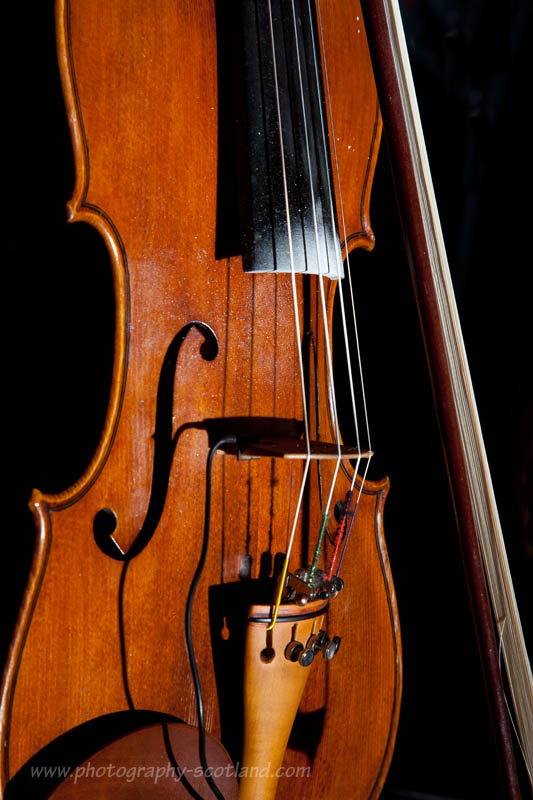
Learning harmonies in the String Circle fiddle class, Edinburgh
Photo ©Ros Gasson

Working on tone on the fiddle

Developing tone on the fiddle

We spent tonight’s lesson doing some more work on our tone. We started by playing through the tune from last week – I See Mull. Then we learnt a new waltz – Dance des Petit Filles (The Dance of the little Girls). The written music is on the music page. It’s an unusual tune, and turned out to be quite a challenge to learn!

After the break, we did some more work on our tone on the fiddle. We split into pairs, and gave each other feedback about our bows. We started off focusing on keeping the bow perpendicular to the fiddle strings, then worked on playing with the bow closer to the bridge.

Bow hold

Developing a relaxed and comfortable bow holdwill also help us play with a more mellow tone.

Fiddle lessons in Edinburgh - improving tone in the String Circle fiddle class

We put down our fiddles for a while, and worked on our bow holds. If you drop your bowing arm down by your side (without holding the bow!), and shake it out, your hand relaxes. You can keep the hand in this relaxed position, and raise it up in front of you, and place the bow into it. It gives an idea of how relaxed the bow hold can be when you’re playing. Getting into a habit of doing this before picking up the bow to play will help develop a more relaxed bow hold when playing.

It’s particularly important to keep the thumb relaxed and slightly bent.

We tried out moving the bow through long bow strokes, to get the feel of having a flexible wrist when we play.

The we talked about how the 1st finger and the pinkie are important for helping to keep control over our volume when we’re playing. The thumb acts as a pivot for the bow. If we put a bit of pressure on the pinkie when we play a bow stroke, it takes some of the weight of the bow off the fiddle strings. The lighter bow plays much more quietly, with a delicate tone. We tried this out on out fiddles. Conversely, pushing down with the forefinger pushes the bow into the strings, giving a scrunchier louder sound to the note.

Creating dynamics

We went back to the waltz we learnt earlier, and tried thinking about where we might change the volume of our playing, to help it to become more expressive. We also tried out changing our bow speed to help create a crescendo within some of the longer notes in the tune.

At the end of the evening we played through a few tunes – we played Mrs MacLeod of Raasay, Willafiord and Roxburgh Castle as a set. We also played Fionn’s, a tune by Charlie McKerron which we’ve learnt previously in the class.


How to improve your fiddle tone

Techniques for improving fiddle tone

Tonight we spent most of the class working on creating a clear tone on the fiddle. We started off by learning the tune I See Mull (Chi Mi Muile). Once we had the notes under our fingers, we moved onto thinking about ways we could improve our tone on the fiddle while playing.

We practiced playing an open A string, concentrating on keeping the bow perpendicular to the strings throughout the full bow stroke. We worked in pairs so we could get feedback from the other person. It can be very difficult to tell if your own bow is perpendicular to the strings or not! It’s important to keep the wrist flexible, and the hand, arm shoulders and neck relaxed, throughout the complete bow stroke. A flexible wrist helps us to keep the bow in a straight straight line at the beginning at end of the bow stroke.

We tried out playing the tune again thinking about keeping the bow at right angles to the fiddle strings. It made a noticeable difference to the sound we created.

Next we moved on to thinking about whereabouts on the fiddle we were placing the bow. Keeping the bow fairly close to the bridge throughout the bow stroke helps to create a fuller sound and a mellow tone. We split into pairs again to give each other feedback on this.

After that, we tried playing more from our subconscious. As we were quite familiar with the tune, we stood in a circle, and tried playing the whole tune down an octave. We focused on thinking about the tune itself rather than where our fingers were going. Once we’d done that, we tried out alternating round the circle, with one person playing down an octave and the next person playing up the octave.

Fiddle lessons in Edinburgh  - working on tone on the fiddle
©Ros Gasson

Vibrato

We briefly looked at how to add vibrato to notes.The left hand needs to be very relaxed to achieve this. We started out by placing the 3rd finger on the A string. Using the wrist, we are aiming to rock the hand backwards and forwards. We’ll come back to this again later on in the term. Here’s some more detailed  information on learning to play with vibrato.

Tunes

We finished off the evening by playing through the march and 2 reels we have learnt so far in the class, as a single set of tunes. The B part of Ramnee Ceilidh is quite a challenge to play at speed. We went back over this, slowing it down a bit to remind ourselves of the notes. We also looked at how to play the triplet, which is a bit awkward as it appears on an upbeat in the tune.

Tone and rhythm on the fiddle

 Improving tone and rhythm

Tonight we worked on techniques to help us with our tone and rhythm while playing.
We started the evening by going over the second part of Gordon Duncan’s reel Ramnee Ceilidh. It has a syncopated rhythm. We talked about different ways to tap our feet to help us keep in time when we’re playing syncopated rhythms. We also spent some time working on playing triplets. We were playing the three notes in the triplets starting on a down bow. The action comes from the wrist. The second and third notes are created by bringing the down bow to a very sudden stop. If the wrist is relaxed enough then the bow ‘judders’ up then down again.

Grace notes

We also tried out playing a grace note on the F# (the crotchet) near the start of the B part of the tune. We’re aiming to flick the finger quickly on and off the string to play the grace note. When you’re playing a reel at speed, you won’t hear a note as such where a grace note is played, so it doesn’t matter whether you use the 2nd or 3rd finger. The action of flicking the string briefly ‘deadens’ the F# that we’ve been playing, as it stops the string resonating. You can play the grace note at the start of the F#, in the middle of it, or at the end of it. Each will have a slightly different effect on the sound.

How to improve tone on the fiddle

Working on tone and rhythm in fiddle lessons
Photo ©Ros Gasson

There are several things we can do to help create a good tone when playing the fiddle:
* Keep a relaxed bow hold. It’s particularly important to make sure that the thumb doesn’t ‘lock’ in a tense position.
* Keep the bow close to the bridge throughout the bow stroke.
* Keep the bow at right angles to the fiddle’s strings throughout the bow stroke. We looked at the importance of having a flexible wrist. If we play with a rigid wrist, the bow will tend to skew on the strings at the start and finish of the bow stroke.
* When playing on the E string, we worked on keeping a slightly lighter touch with the bow.

We had a go at playing rhythm on percussion instruments. We all started off by playing on the beat. Once we had a steady rhythm going, some people moved to playing the offbeat, and then upbeats.

At the end of the evening we played through Roxburgh Castle again, and reminded ourselves of the chord accompaniment that we learnt a couple of weeks ago.

How to play reels faster

 Learning how to play reels faster

Tonight we spent the evening looking at what we can do to help us to be able to play reels faster. When you’re learning to play the fiddle there are a lot of different things to think about. Many people struggle with learning to play reels  at speed. There are various things we can do with our playing that will help us to be able to play faster while keeping our speed under control.

Bow control

At the start of the evening we learnt the reel Ramnee Ceilidh by the Highland piper Gordon Duncan. It’s a fairly straightforward tune, but it has some interesting things going on with the rhythm, which make it a bit more of a challenge play at speed. We worked on the following points:

  • Using our wrist to move the bow in short bow strokes. We practiced playing a few notes crossing strings, using a clockwise circular wrist action to move the bow from one string to the other.
  • Using very short bow strokes when we are bowing a run of quavers in a tune. We practiced doing this while playing up and down a D scale.
  • Minimising the vertical movement of the bow when we’re moving from one string to another. We looked at a short part of a tune that moves between the A and E strings as an example. When the tune was on the A string, we played with the bow very close to the E string. When the tune moved to the E string, we still kept the bow very close to the A string.
  • Minimising the amount of movement of our left hand on the fingerboard. When we were lifting our fingers between notes, we tried just lifting them clear of the string and no more. There are often times in tunes when we can keep a finger in place on the string, as we’ll return back to that note again.
  • Keeping a steady tempo by tapping a foot. It’s helpful to have some distinction between the beats and the offbeats. We could do this by tapping one foot on the beat, and the other on the offbeat, or a heel on the beat and a toe on the offbeat.
  • Playing without consciously thinking about what we are doing – learning to listen to the tune we’re playing as we play it, and allowing the subconscious mind to be in charge!
  • Thinking about how we phrase a tune. Getting our feet are tapping helps us to start to emphasise either the beats or the offbeats in a tune.

Learning how to play reels faster, in the string Circle fiddle class, Edinburgh

We tried playing up and down a scale at speed, working on playing it subconsciously rather than thinking about what our fingers and bowing arms were doing. We also played through Roxburgh Castle. We started very slowly, and  each time we played through the tune we played it a bit faster, using some of these techniques. We’ll spend more time during the term trying out techniques that will help us to speed up  reels, and still keep a steady tempo.

We finished off the evening by playing through the 3 tunes we have learnt this term in a set.

The written music for Ramnee ceilidh is on the music page on the website. Here’s a webpage with several different bands playing Ramnee ceilidh.

Playing with rythm and accompaniment

Using different rhythms in our playing

Rhythm is an important part of making music. There are various playing techniques we can learn to help us play with a string sense of rhythm. We started off the class talking about developing a basic ‘default’ bowing pattern when we play reels. We’re aiming to be able to play with a down bow at the start of the bar, and to do this without thinking about it. Once it has become a subconscious habit, it allows us to start playing around with rhythms by varying the bowing patterns we’re using.

We started off by going over some possibilities for bowing Roxburgh Castle. We used a ‘one down three up’ bowing pattern to add emphasis to the on beats. We also tried emphasising the offbeats on the B part, where the tune us crossing strings.

Accompanying a tune with rhythm played on the fiddle

We learnt a rhythm accompaniment to the tune, using 3 chords played on the G and D strings. We were using A/E, B/E and C#/E. We tried playing the chords along to the tune on the beat, then we had a go at playing the chords on the offbeat. Once we’d got that, we played on the beat in the A part of the tune, and on the offbeats in the B part. We also tried to play the tune emphasising the offbeats in the B part at the same time.

Using the wrist when crossing strings

We looked at our bowing arm  action when we’re playing tunes with a lot of string crossing. Using a wrist action to move the bow from one string to the other helps us to control the bow’s movement more easily. It will also make playing at speed easier.

Playing in tune

At the end of the evening we went back to playing notes from the A arpeggio, and we wandered around the room while we were playing. We were listening to each other, and working on playing in tune with the people nearby who we could hear.

Playing with rhythms in reels


March and reel rhythms

Tonight we worked on rhythms in marches and reel. We started the class by going over the 2/4 march Campbell’s Farewell to Redcastle, and reminded ourselves where some of the grace notes were. We also got our feet tapping on the beat, and emphasised all the notes on the beat, keeping a steady tempo.

Tone and tuning

We tried playing long bows on an open A string, paying attention to getting our bows perpendicular to the fiddle strings to help with tone. Then we played different notes and chords from the A arpeggio (A, C#, E and A), listening to our tuning while we were playing, and working on our tone at the same time. After that, we tried walking around the room while we were playing long notes from the arpeggio. While we did this, we were listening to other people around us, and working on playing in tune with one another.

Onbeats and offbeats

Then we moved on to playing the notes  E A C# E A E C# A in reel rhythm, tapping our feet while we emphasised the notes on the beat. Some of the class then played a chord beneath this, playing a low A and E, in an offbeat rhythm. We tried varying the run of notes over the top, and changed to emphasising the offbeats along with the chords.

Learn to play with rhythms on the fiddle in the String Circle class
Photo ©Ros Gasson

We learnt the reel Roxburgh Castle (the music is on the tunes page), and played around with different rhythms, emphasising beats or offbeats in the second part.

We also tried playing Campbell’s Farewell to Redcastle with the reel after it. We finished off the evening by playing a set of tunes together: Captain Campbell, a strathspey, followed by 2 reels – Brenda Stubbert, and Jenny Dang the Weaver.

Fiddle bow hold and bowing patterns

 Relaxing the bow hold

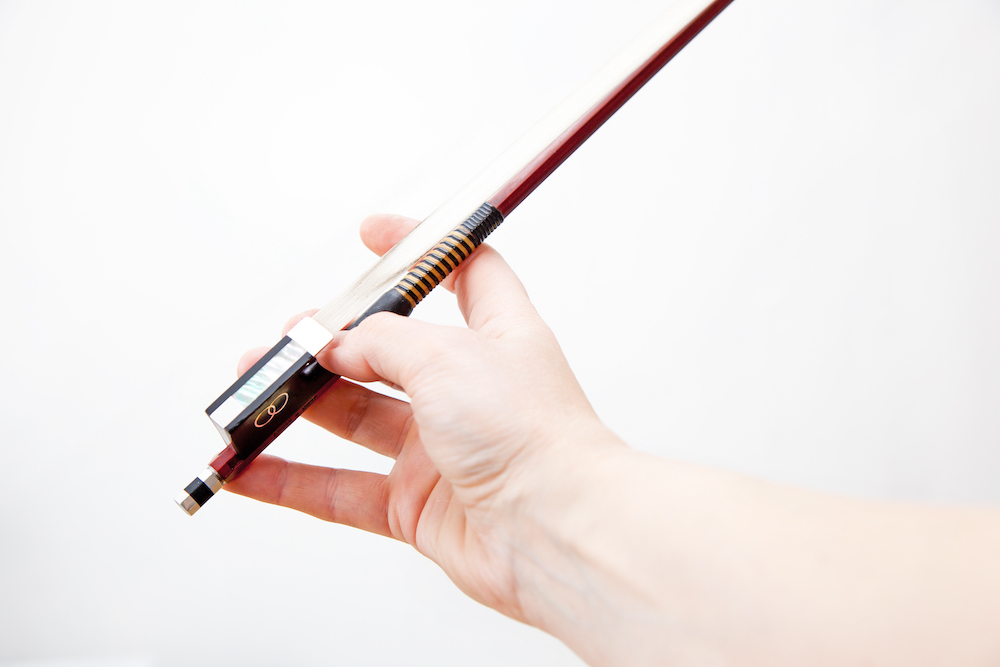
Tonight we looked at our fiddle bow hold, and how to keep the hand really relaxed while we’re playing. It’s particularly important to keep the thumb relaxed and slightly bent, to avoid tension creeping into the muscles in the forearm. We tried out using the pinkie and first finger to help us change the pressure of the bow on the strings. With a relaxed hold on the bow, they can be used along with the thumb, which acts as a ‘pivot’ for the bow. We also worked in pairs, helping each other to work on keeping our bows perpendicular to the strings while playing long bow strokes.

A fiddle player's bow hold, seen from underneath, showing the thumb slightly bent
Photo © Ros Gasson

We played through Campbell’s Farewell to Redcastle several times, and looked at possible chords we could play throughout the tune. The chords can be placed to emphasise either the onbeats or the offbeats in the tune. We also looked at playing  some grace notes in both parts of the tune.

It’s important to keep the left hand really relaxed when playing grace notes, to allow the finger to effectively flick on and off the string really fast. We’re aiming to turn this into a fast fluid movement.

Bowing patterns

We spent some time towards the end of the evening playing with different bowing patterns. While we played up and down a D scale we tried mixing up single bow strokes, slurring pairs of notes, and a one-down-three-up pattern. We discovered that it’s much easier to emphasise the note on the up beat when you’re playing single bow strokes than when you’re slurring notes together.

We finished off the evening by playing a few tunes together.

“Without music, life would be a mistake”
                                                               Friedrich Nietzsche

String Circle fiddle technique class


Fiddle technique class starts a new term

Tonight was the first night back for another year of the String Circle class. It was lovely to see some new faces in the class (and the more established ones too!). We’ll be continuing to focus on technique in the class. We’ll work on a few common session tunes which we’ll learn  by ear throughout the term.

We started off talking about what particular aspects of technique each person in the class wants to work on with their own fiddle playing. Some topics came up for  several people in the group, so we’ll be working on bow holds, tone, how to play competently when we’re playing faster, accenting tunes, ornamentation, double stopping, and tuning … in amongst plenty of other things!

Learn about fiddle technique in the String Circle fiddle class in Edinburgh
Photo ©Ros Gasson

We began playing open strings, and thinking about various ways we can improve the tone of a fiddle.

* Keeping our bow hold and arm relaxed throughout the bow stroke. It’s important to keep the thumb slightly bent to avoid tension spreading up the muscles of the forearm. The fingers of the right hand should be relaxed as well.

* Keeping the bow’s movement perpendicular to the fiddle strings. It can be difficult to see whether your own bow is at right angles to the strings when you’re playing. It’s helpful to use a mirror to check what’s happening.

* Keeping the bow in the area on the strings where the fiddle sound is ‘sweetest’.

Beats and offbeats

Then we moved on to playing a D scale. We used the scale to start thinking about how a reel is broken up into beats and offbeats. We tried tapping our feet and emphasising either the beat or the offbeat while we played.

After the break we learnt the 2/4 march Campbell’s Farewell to Redcastle. The written music for the tune is on this website’s music page. We’ll do some more work on this tune next week, thinking about some possibilities for ornamentation and double stopping that we can play.

String Circle fiddle class in Edinburgh

String Circle fiddle class restarting soon

Now that the  Edinburgh Fringe is underway, my thoughts are beginning to turn to the Autumn term for the String Circle fiddle class. I’m looking forward to welcoming some new people into the Edinburgh-based group, and catching up with everyone after the summer break.

Develop steady timing

Learn about fiddle technique in the String Circle fiddle class in Edinburgh
Photo ©Ros Gasson

In the class we’ll be learning more about ways to develop a steady sense of timing to our playing. We’ll look at ways to bring tunes to life. We’ll be learning more about different rhythms  we can introduce into our fiddle playing. We’ll spend time learning some of the techniques for doing this. For anyone who wants to learn to play for dancing these are important skills to learn.

We’ll also be working on developing tone and tuning, and developing our skills playing with other people. If you’d like to develop your confidence in playing in informal sessions, this fiddle class is a good place to start.

A fiddle class for technique

We’ll be continuing to focus on technique. We’ll be learning a few popular session tunes by ear throughout the term. For anyone who is planning on joining the fiddle class in September, if you have a suggestion of favourite tune you would like to learn during the term, add a comment at the end of this post. Include the tune name (and composer, if you know it), and we might include it in our repertoire.

Our new term starts on Tuesday 11th September. Enrolments for the class open at St Bride’s on Monday 3rd September. Full details for enroling in the class are on the String Circle fiddle class website homepage.